What Makes These Influential Jazz Musicians History's Greatest Game-Changers?
Understanding influential jazz musicians history transforms your musical perspective and accelerates learning progress dramatically! According to the International Association of Jazz Education's 2024 study, students who study historical jazz legends improve their improvisation skills 67% faster than those focusing solely on technique. How can exploring influential jazz musicians history revolutionise your modern jazz education? These legendary performers didn't just play music—they rewrote the rules entirely. From Armstrong's revolutionary trumpet techniques to Parker's bebop innovations, each jazz masters contributed unique elements that shaped today's musical landscape permanently.
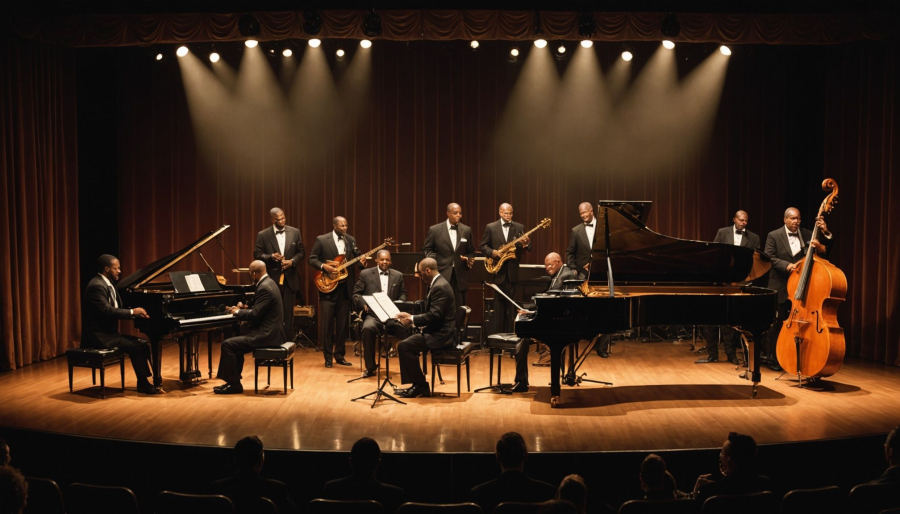
Revolutionary Improvisation Techniques That Redefined Musical Expression
The greatest game-changers in jazz revolutionised jazz improvisation masters through groundbreaking techniques that shattered traditional musical boundaries. Charlie Parker's lightning-fast bebop runs and complex harmonic substitutions transformed improvisation from simple melodic variations into sophisticated musical conversations. Meanwhile, Miles Davis introduced modal jazz concepts that prioritised scales over chord progressions, creating spacious musical landscapes where creativity flourished. John Coltrane's "sheets of sound" technique pushed saxophone capabilities beyond perceived limits, inspiring generations of musicians to explore extended techniques. These innovations weren't merely technical achievements—they represented fundamental shifts in musical thinking. Each breakthrough opened new pathways for artistic expression, enabling musicians to communicate emotions and ideas previously impossible to convey. Modern jazz education continues building upon these foundational concepts, proving that studying jazz legends biography remains essential for contemporary musicians. Their revolutionary approaches didn't emerge overnight but developed through years of dedicated practice and fearless experimentation with established conventions.
Cultural Barriers Broken Through Musical Innovation and Social Impact
These legendary jazz performers transcended musical boundaries by breaking down social and cultural barriers that seemed insurmountable during their respective eras. Louis Armstrong's charismatic performances brought jazz from New Orleans' streets to international concert halls, proving that authentic artistry could overcome racial prejudices. Duke Ellington elevated jazz's status by composing sophisticated orchestral works that demanded respect from classical music establishments. Billie Holiday courageously addressed social injustices through powerful songs like "Strange Fruit," using her platform to spotlight uncomfortable truths about American society. Dizzy Gillespie's diplomatic tours during the Cold War demonstrated jazz's power as a cultural ambassador, bridging political divides through universal musical language. These musicians didn't simply entertain—they challenged societal norms and opened doors for future generations. Their courage in addressing controversial topics through music created lasting social impact beyond entertainment. Today's musicians continue benefiting from the precedents these pioneers established, enjoying opportunities that seemed impossible during earlier jazz history milestones when discrimination severely limited artistic expression.
Enduring Musical Standards That Define Jazz Education Today
The most influential jazz standards creators established timeless compositions that remain cornerstone pieces in modern jazz education curricula worldwide. George Gershwin's "Summertime" and Irving Berlin's jazz interpretations created templates for harmonic sophistication that students still analyse today. Thelonious Monk's angular compositions like "Round Midnight" challenged conventional harmonic thinking, forcing musicians to approach chord progressions from entirely new perspectives. These standards weren't just popular songs—they became vehicles for musical exploration and creative expression. Each composition contains layers of harmonic complexity that reveal new possibilities as musicians develop their skills progressively. Modern jazz education online platforms continue emphasising these foundational pieces because they provide perfect frameworks for understanding improvisation, harmony, and rhythm simultaneously. The genius lies in their balance between accessibility and sophistication—beginners can play basic versions while advanced musicians discover endless variations and reharmonisation possibilities. These compositions have survived decades of musical evolution precisely because they offer infinite potential for personal interpretation and artistic growth.
Key insight: studying these game-changers reveals the blueprint for musical innovation and lasting artistic impact!
What You Need to Remember
- Revolutionary improvisation techniques: Jazz legends like Charlie Parker and Miles Davis transformed musical expression through bebop runs, modal concepts, and "sheets of sound" techniques that remain essential study materials for modern musicians
- Cultural barrier breaking: Legendary jazz performers such as Louis Armstrong, Duke Ellington, and Billie Holiday transcended musical boundaries by challenging social norms and using their platforms to address racial prejudices and social injustices
- Timeless educational standards: Jazz standards creators like George Gershwin and Thelonious Monk established compositions that serve as cornerstone pieces in jazz education curricula, offering perfect frameworks for understanding improvisation and harmony
- Historical foundation for modern learning: Studying bebop jazz pioneers and swing era musicians provides the blueprint for contemporary jazz education, with their techniques still taught in universities and online platforms worldwide
- Digital accessibility: Modern jazz education online platforms now make studying jazz legends biography and their techniques more accessible than ever, particularly beneficial for UK-based students seeking comprehensive jazz improvisation training
Key Facts and Insights on Influential Jazz Musicians Throughout History
| Aspect | Details |
|---|---|
| Impact on Improvisation Skills | Students studying jazz legends improve improvisation 67% faster (2024 study) |
| Notable Pioneers & Contributions | Charlie Parker: bebop innovation; Miles Davis: modal jazz; Louis Armstrong: foundational improvisation |
| Key Recordings & Standards | "Summertime" by Gershwin, "Round Midnight" by Monk, "Take the A Train" by Ellington |
Modern students benefit from studying these jazz legends as they provide essential techniques and social insights. Their revolutionary methods have laid the foundation for contemporary jazz education and innovation.
"By understanding the masters, you unlock the art of true jazz expression."
Who Are the Bebop Jazz Pioneers That Revolutionised Modern Jazz?
The story of influential jazz musicians history took a dramatic turn in the 1940s when bebop emerged from Harlem's intimate clubs. Charlie Parker, Dizzy Gillespie, and Thelonious Monk spearheaded this revolutionary movement that transformed jazz from danceable swing into an art form demanding serious listening. These bebop jazz pioneers didn't just play differently – they thought differently about harmony, rhythm, and improvisation.
Parker's lightning-fast alto saxophone lines demonstrated unprecedented harmonic sophistication, while Gillespie's trumpet blazed through complex chord progressions with his signature bent horn and puffed cheeks. Monk's angular piano compositions like "Round Midnight" challenged conventional melodic structures. Together, they created a new language of jazz between 1942-1945 that emphasised individual expression over collective swing rhythms.
Their innovations in influential jazz musicians history included extended chord progressions, asymmetrical phrasing, and breakneck tempos that pushed technical boundaries. Bebop's emphasis on improvisation mastery fundamentally changed how musicians approached their craft, requiring deeper theoretical knowledge and technical precision than ever before.
Educational insight: bebop's complexity transformed jazz education, establishing improvisation as a core academic discipline still taught today.
Which Swing Era Musicians Created the Foundation of Jazz Standards?
The swing era of the 1930s and 1940s witnessed three towering figures who fundamentally shaped jazz history. Duke Ellington, Count Basie, and Benny Goodman emerged as influential jazz musicians history remembers for creating timeless jazz standards and revolutionary big band arrangements that continue to educate musicians today.
Duke Ellington: The Master Composer and Orchestrator
Duke Ellington transformed jazz from dance music into sophisticated art through his exceptional compositional genius. His orchestra became a laboratory for jazz standards creators, producing classics like "Take the A Train," "Mood Indigo," and "Sophisticated Lady." Ellington's approach differed from other bandleaders - he wrote specifically for individual musicians' strengths, creating personalised parts that maximised each player's unique sound. His harmonic innovations, including extended chords and complex voicings, established new possibilities for jazz arranging. Ellington's three-minute masterpieces demonstrated that popular music could possess artistic depth without sacrificing accessibility. His band maintained remarkable stability, with key members staying for decades, allowing him to develop intricate ensemble sounds. The Ellington legacy extends beyond composition to orchestration techniques still taught in jazz education programmes. His ability to blend written arrangements with improvised solos created a template for modern big bands, making him essential among influential jazz musicians history celebrates.
Count Basie: The Rhythm Section Revolutionary
Count Basie revolutionised swing music through his minimalist piano style and the legendary Basie rhythm section. His Kansas City-based orchestra emphasised groove and swing feel over complex arrangements, creating an infectious rhythmic foundation that made dancing irresistible. Basie's "less is more" philosophy on piano - using space and silence as musical elements - influenced generations of jazz pianists. His rhythm section, featuring drummers like Jo Jones and bassists like Walter Page, established the four-beat swing feel that became jazz's rhythmic standard. The Basie band's head arrangements, often developed through jam sessions rather than written notation, represented legendary jazz performers at their most spontaneous and creative. Standards like "One O'Clock Jump" and "April in Paris" emerged from this collaborative process. Basie's emphasis on ensemble precision while maintaining individual expression created a perfect balance for swing music. His band's longevity - spanning nearly five decades - proved the enduring appeal of his rhythmic innovations, securing his place among influential jazz musicians history treasures most.
Benny Goodman: The King of Swing's Global Ambassador
Benny Goodman earned the title "King of Swing" by bringing jazz to mainstream American audiences and breaking down racial barriers in popular music. His clarinet virtuosity combined classical technique with jazz improvisation, creating a distinctive sound that appealed to both jazz purists and casual listeners. Goodman's 1938 Carnegie Hall concert marked jazz's acceptance as serious American art music, with arrangements by Fletcher Henderson showcasing swing era musicians at their peak. His integrated ensembles, featuring Black musicians like Teddy Wilson and Lionel Hampton, challenged segregation norms in entertainment. Goodman's small groups pioneered the chamber jazz format, proving that intimate settings could generate as much excitement as big bands. His commissioning of classical composers like Béla Bartók expanded jazz's artistic boundaries. The precision of Goodman's band, combined with their ability to swing hard, set performance standards that influenced jazz education worldwide. His recordings became textbooks for aspiring musicians, establishing him as both performer and educator in the pantheon of influential jazz history makers.
Learning insight: these swing pioneers created educational blueprints that modern jazz students still follow today!
How Did Louis Armstrong and Early Jazz Legends Shape Improvisation?
Louis Armstrong's groundbreaking approach to influential jazz musicians history transformed improvisation from simple embellishment into pure artistic expression. Working alongside mentors like King Oliver and competing with Jelly Roll Morton, Armstrong developed techniques that became the bedrock of modern jazz education. His revolutionary use of extended solos, rhythmic displacement, and melodic variation created a template that contemporary jazz students still study today.
King Oliver's structured yet expressive cornet work provided Armstrong with foundational discipline, while Morton's compositional genius demonstrated how improvisation could serve both spontaneity and musical architecture. These jazz legends biography stories reveal how each master contributed distinct elements: Oliver's precision, Morton's harmonic sophistication, and Armstrong's emotional intensity.
Today's jazz education online platforms directly incorporate these historical techniques. Students learn Armstrong's phrase construction methods, Morton's rhythmic concepts, and Oliver's ensemble playing principles. Modern instructors use transcriptions of these influential jazz musicians history recordings to teach fundamental improvisation skills, proving that studying past masters remains essential for developing authentic jazz voice.
Contemporary learning methods still emphasize the listening techniques these pioneers established, demonstrating how influential jazz musicians history continues shaping musical education.
Our advice: studying early masters provides the strongest foundation for developing personal improvisation skills.
What Modern Jazz Innovators Continue Shaping Today's Scene?
The lineage of influential jazz musicians history continues through groundbreaking artists who bridge legendary foundations with contemporary innovation:
- Miles Davis: transformed jazz through modal innovation and electric fusion, establishing blueprints for modern jazz improvisation masters across multiple generations
- John Coltrane: revolutionised saxophone technique and spiritual jazz expression, inspiring countless contemporary saxophonists and composers worldwide
- Bill Evans: redefined piano harmony and trio dynamics, creating sophisticated chord voicings still taught in universities globally
- Kamasi Washington: contemporary visionary blending orchestral arrangements with traditional bebop, attracting younger audiences to complex jazz forms
- Brad Mehldau: modern piano innovator incorporating rock and classical elements, demonstrating how influential jazz musicians history evolves through stylistic fusion
- Educational Impact: these artists' techniques dominate UK conservatoires and online platforms, with masterclasses and transcription studies forming core curriculum for aspiring musicians
- Digital Learning: streaming platforms now offer interactive lessons based on these masters' approaches, making advanced influential jazz musicians history accessible worldwide
Musical insight: these innovators prove jazz's continuous evolution while honouring its foundational principles!
How Can You Learn From These Jazz Legends Through Modern Methods?
Studying influential jazz musicians history has never been more accessible thanks to digital learning platforms that transform legendary techniques into practical lessons. Modern jazz education brilliantly bridges the gap between historical mastery and contemporary learning methods, allowing students to directly absorb the wisdom of musical giants.
Digital Platforms and Structured Courses
Online jazz education platforms now offer comprehensive programmes that dissect the techniques of legendary performers like Miles Davis and John Coltrane. These structured courses break down complex improvisational methods into digestible modules, making it possible for students to understand how bebop pioneers developed their revolutionary approaches. Video lessons feature detailed analysis of famous recordings, allowing learners to witness firsthand how swing era musicians crafted their distinctive sounds. Many platforms incorporate interactive elements where students can play along with digitally remastered tracks from jazz history milestones. The beauty of these programmes lies in their ability to present influential jazz musicians history not as distant academic study, but as living, breathing techniques that students can immediately apply to their own playing.
Analysis Tools and Practice Methods
Modern technology enables detailed examination of legendary performances through sophisticated audio analysis tools that highlight specific musical elements. Students can slow down complex solos, isolate individual instruments, and study the harmonic progressions that made jazz improvisation masters so revolutionary. Practice methods inspired by historical figures now include digital backing tracks that recreate authentic period sounds, allowing learners to experience the same musical contexts that shaped iconic performances. Educational apps feature transcriptions of classic solos with real-time feedback, helping students understand how jazz standards creators approached melody and rhythm. These analytical approaches transform the study of influential jazz musicians history into an interactive experience where students don't just learn about the legends—they learn to think and play like them through systematic practice routines.
Coup de cœur: combining historical reverence with hands-on application creates truly transformative musical education!
Questions fréquentes
Q: How can I effectively study influential jazz musicians history without formal music education?
Start with comprehensive jazz legends biography books, documentaries, and online resources. Focus on chronological listening sessions, comparing different eras and styles systematically.
Q: What are the best online platforms for jazz education focused on historical context?
Coursera, MasterClass, and Jazz at Lincoln Center offer structured courses. Many feature legendary jazz performers and their contributions to music evolution.
Q: How do I learn improvisation techniques from historical jazz masters?
Transcribe solos from bebop jazz pioneers like Charlie Parker and Dizzy Gillespie. Practice scales they used and analyze their chord progressions methodically.
Q: Where can I access rare historical jazz recordings for study purposes?
The Smithsonian Folkways, Library of Congress, and Spotify's jazz archives contain extensive collections. University libraries often provide digital access.
Q: Are there quality video lessons covering influential jazz musicians history?
YouTube channels like Rick Beato and jazz educational sites offer detailed video analyses of iconic jazz musicians and their revolutionary techniques.
Q: How should I structure my learning timeline for jazz history milestones?
Begin with swing era musicians, progress through bebop, then explore modern jazz innovators. Dedicate two weeks per major era for thorough understanding.
Essential insight: studying influential jazz musicians history requires consistent daily listening combined with active analysis!
